
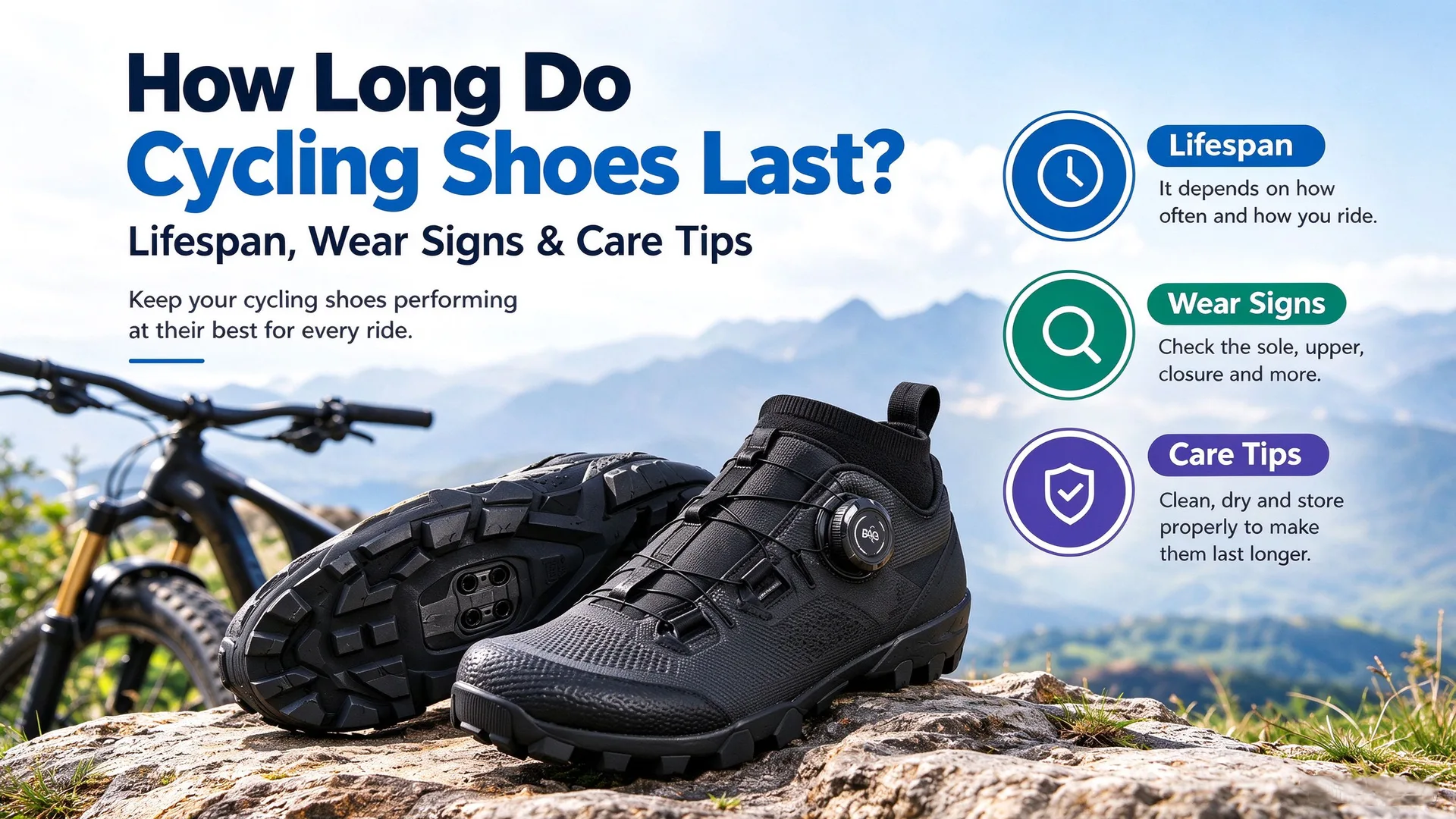
How long do cycling shoes last?
There is no single number of months, years or miles that applies to every pair of cycling shoes.
A rider who cycles indoors several times a week may wear shoes differently from someone who rides muddy MTB trails every weekend. Road riders, commuters, gravel riders and competitive cyclists also place different demands on their footwear.
Instead of replacing cycling shoes according to a fixed schedule, a better approach is to inspect their sole, upper, closure system, heel support, internal lining and overall fit.[Cycling Shoe Size Guide: How Should Cycling Shoes Fit?]
In general, cycling shoes should be replaced when wear or damage begins to affect fit, support, stability, cleat security, traction or riding performance.
This guide explains how to recognize worn-out cycling shoes, how to care for them properly, and when repairing a component may be enough instead of buying a completely new pair.
Quick Answer: How Long Do Cycling Shoes Last?
Cycling shoes do not have a universal fixed lifespan.
A well-maintained pair can remain usable for a long time, but the actual lifespan depends on:
- Riding frequency
- Riding environment
- Road vs. MTB use
- Indoor vs. outdoor use
- Walking in cycling shoes
- Exposure to mud and water
- Sweat and moisture
- Upper material
- Sole construction
- Closure system
- Cleaning and storage habits
The most important question is therefore not simply:
“How old are my cycling shoes?”
Instead, ask:
“Are my cycling shoes still providing the fit, support, stability and protection they were designed to provide?”
If the answer is no, it may be time for a replacement.
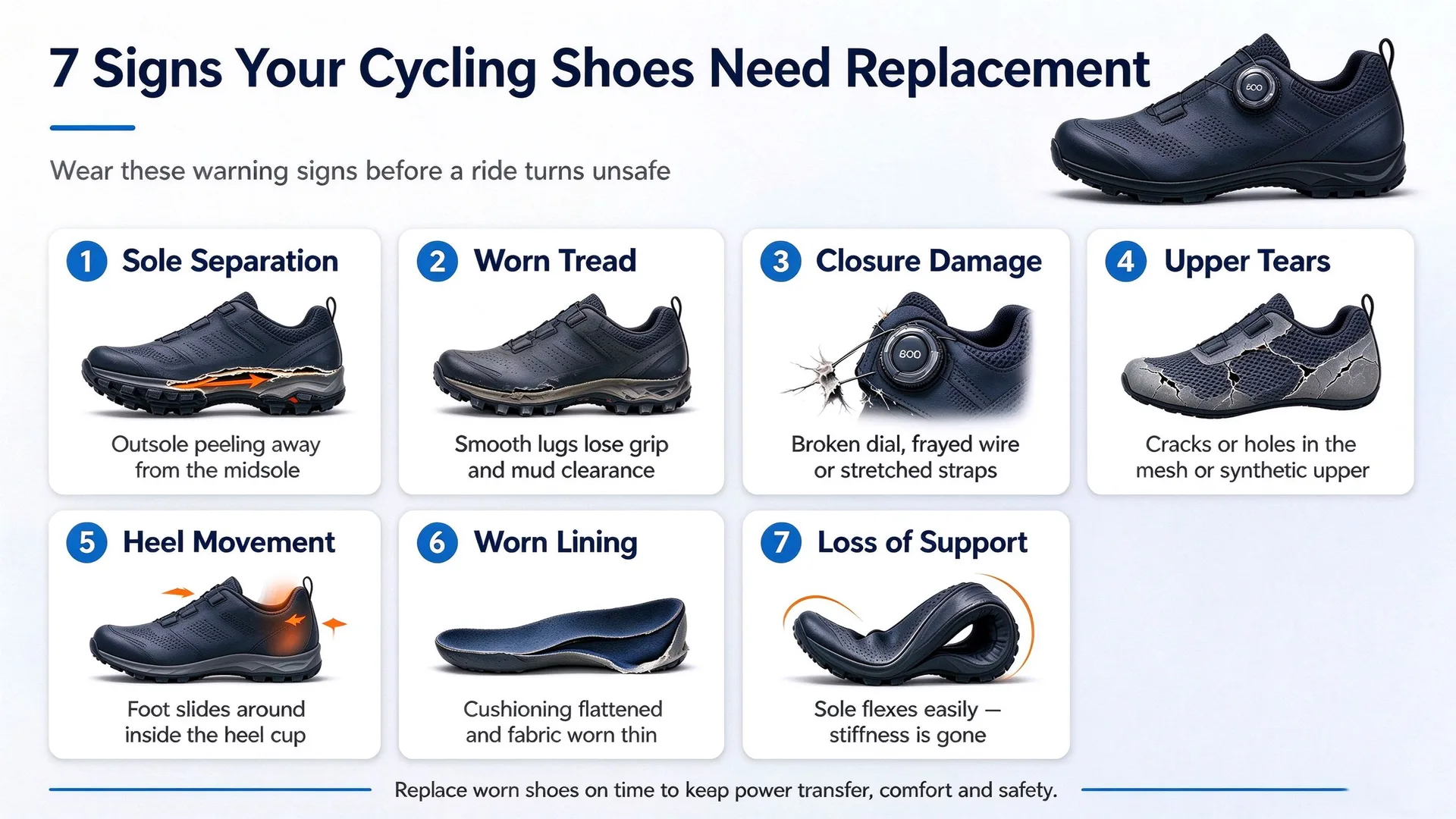
7 Signs Your Cycling Shoes Need to Be Replaced
Not every scratch means that a cycling shoe is finished.
Normal cosmetic wear is expected, especially for MTB and gravel shoes.
However, some types of damage can affect the actual function of the shoe.
Here are seven important signs to check.
1. The Sole Is Separating From the Upper
One of the clearest signs that a cycling shoe may have reached the end of its useful life is sole separation.
Look carefully around the connection between:
- Upper
- Midsole
- Outsole
If the sole is visibly peeling away from the upper, the shoe may no longer provide the structural stability it originally had.
For MTB and gravel riders, this can become particularly important because mud, water, rocks and repeated off-bike walking can place additional stress on the shoe.
A small cosmetic mark is very different from actual structural separation.
If the outsole is visibly separating and the shoe structure is compromised, replacing the shoes is generally safer than continuing to ride in them.
2. The Outsole Tread Is Heavily Worn
The outsole is one of the easiest areas to inspect.
Look for:
- Heavily worn tread
- Missing rubber sections
- Smooth areas where traction used to exist
- Cracks
- Deep cuts
- Damaged lugs
- Excessive abrasion around contact areas
For MTB cycling shoes, outsole wear can be especially noticeable because the shoes may be used for walking, hike-a-bike sections or technical terrain.
Road cycling shoes can show a different pattern of wear because the outsole is often designed primarily around the pedal interface rather than extensive walking.
If the sole no longer provides the intended traction or structural support, it may be time for replacement.
[Cycling Shoe Sole Guide: Carbon Fiber vs. Nylon, Stiffness, Weight & Power Transfer]
3. The Closure System No Longer Holds Securely
Your cycling shoes should remain securely closed throughout the ride.
Depending on the shoe, the closure system may use:
- Rotary dial
- Strap
- Velcro
- Laces
- A combination of closure systems
Check whether the closure still works consistently.
Potential warning signs include:
- Dial slipping
- Strap no longer holding tension
- Damaged lace
- Broken lace guide
- Torn attachment point
- Closure loosening during riding
- Difficulty adjusting the shoe
However, a damaged closure does not always mean the entire shoe needs to be replaced.
Some closure components can be repaired or replaced independently.
This is an important distinction between a replaceable component problem and a structural shoe problem.
4. The Upper Has Major Tears or Exposed Internal Material
Small scratches and surface marks are normal.
A serious tear is different.
Inspect the upper for:
- Large tears
- Open seams
- Damaged bonding
- Exposed internal layers
- Torn reinforcement panels
- Damaged toe structure
- Severe abrasion around the heel
If the upper can no longer hold the foot securely, the shoe may no longer perform as intended.
This is especially important for shoes that rely on a close-fitting upper to stabilize the foot during hard pedaling.
5. Your Heel Starts Moving Inside the Shoe
A cycling shoe should hold the heel securely.
If your heel begins moving significantly inside a shoe that previously fit well, it can indicate deterioration of:
- Heel lining
- Internal padding
- Heel counter
- Upper structure
- Closure attachment
- Overall shoe shape
You may notice:
More heel movement → more foot movement → less secure fit
This does not necessarily mean that the shoe is suddenly the wrong size.
The shoe itself may simply have lost some of its original structure after extensive use.
6. The Internal Lining or Footbed Is Heavily Worn
The inside of the shoe deserves just as much attention as the outside.
Check:
- Heel lining
- Footbed
- Insole
- Arch-support area
- Internal fabric
- Padding
Sweat and repeated use can gradually affect internal materials.
If the insole is removable, replacing the insole may sometimes restore comfort without replacing the entire shoe.
But if the internal structure is heavily worn and the shoe no longer provides stable support, a new pair may be the better option.
7. The Shoes No Longer Feel the Way They Used To
This is perhaps the most important sign.
A cycling shoe can gradually deteriorate without developing one dramatic failure.
You may notice:
- Less support
- More foot movement
- Reduced heel hold
- Less stable pedaling
- More pressure in certain areas
- Less comfortable long rides
- Closure adjustment becoming less effective
- The shoe feeling softer or less structured
When several small changes appear together, the shoe may simply have reached the end of its useful life.
You don’t necessarily need to wait until the shoe visibly breaks.
Cycling Shoe Lifespan Depends on How You Ride
The same pair of cycling shoes can experience very different levels of wear depending on how they are used.
Road Cycling Shoes
Road cycling shoes often spend most of their time clipped into the pedals.
Their main wear areas can include:
- Cleat interface
- Heel contact area
- Upper
- Closure system
- Internal lining
If you rarely walk in them and keep them clean and dry, unnecessary outsole wear can be reduced.
MTB Cycling Shoes
MTB shoes can experience much more varied physical stress.
They may be exposed to:
- Mud
- Water
- Dust
- Rocks
- Roots
- Hike-a-bike sections
- Repeated walking
- Trail impacts
As a result, the outsole tread and upper protection may show wear earlier than on a road cycling shoe.
This is one reason MTB shoes should be inspected regularly rather than judged only by age.
Indoor Cycling Shoes
Indoor cycling shoes may avoid many outdoor hazards, but they can still experience substantial use.
The main sources of wear may include:
- Sweat
- Moisture
- Repeated pedaling
- Closure adjustment
- Internal lining wear
Because indoor cycling produces significant heat and sweat, drying the shoes properly after each session can be particularly important.
How Often Should You Check Your Cycling Shoes?
You do not need to perform a detailed inspection after every ride.
A simple routine is enough.
After Every Wet or Muddy Ride
Check:
- Outsole
- Cleat area
- Upper
- Closure
- Interior
Remove heavy dirt before it dries and becomes difficult to clean.
Every Few Weeks
Look more carefully at:
- Tread wear
- Closure condition
- Heel support
- Upper stitching
- Sole connection
Before a Long Ride or Cycling Trip
Perform a more complete inspection.
Pay particular attention to:
- Sole separation
- Cleat attachment area
- Closure system
- Heel structure
- Major upper damage
This is especially useful before a cycling trip, race or multi-day event.
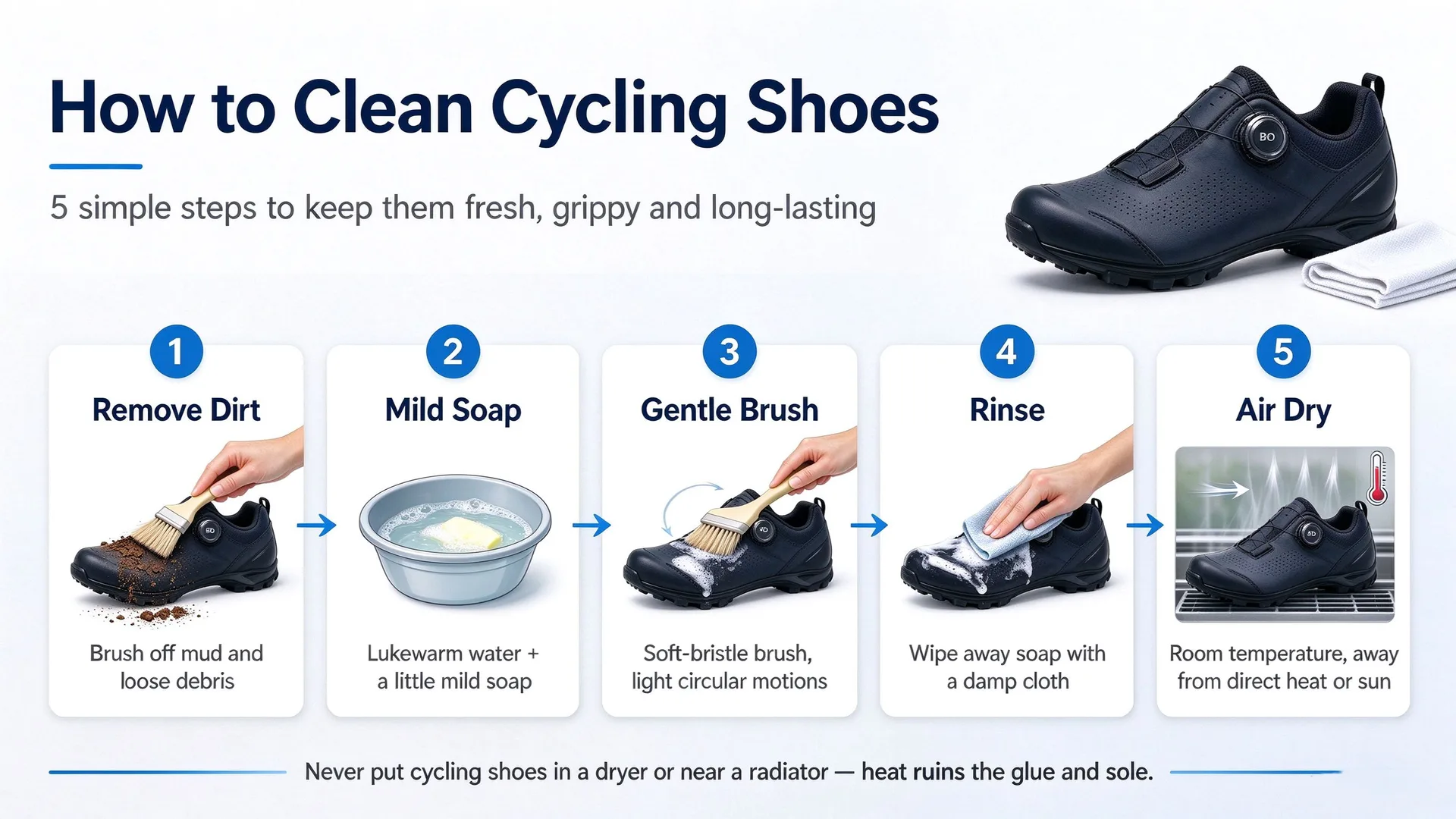
How to Clean Cycling Shoes Without Damaging Them
Regular cleaning can help keep cycling shoes in better condition.
For routine cleaning, start with:
- Lukewarm water
- Mild soap
- Soft or medium-bristle brush
- Clean cloth
- Paper for drying
Remove loose dirt first.
Then gently clean the upper and use a brush to remove dirt from the outsole and textured areas.
Avoid aggressive scrubbing unless the material can safely tolerate it.
Shimano recommends mild cleaning products and gradual air drying, while warning against harsh solvents and excessive heat because they can damage materials, adhesives and the shoe’s shape.
[How to Clean Cycling Shoes the Right Way]
Can You Put Cycling Shoes in a Washing Machine?
Hand cleaning is generally the safer option.
Cycling shoes often contain several different materials, bonded areas, structural components and closure systems.
A washing machine can expose the shoes to unnecessary:
- Water
- Mechanical stress
- Heat
- Detergent
- Repeated movement
Instead, clean the shoes manually and control how much water and pressure each area receives.
Can You Put Cycling Shoes in a Dryer?
Avoid high heat.
This is particularly important for cycling footwear because the shoe may contain synthetic materials, adhesives, reinforcement layers and bonded components.
Instead:
- Remove excess water.
- Open the closure.
- Remove the insole if appropriate.
- Loosely stuff the shoes with absorbent paper.
- Place them in a well-ventilated area.
- Allow them to dry naturally.
Do not place wet cycling shoes directly against a radiator, heater or other high-temperature source.
Avoid prolonged exposure to intense direct sunlight as well.
How to Get the Smell Out of Cycling Shoes
Odor usually becomes a problem when moisture remains inside the shoe for too long.
After a sweaty ride:
Do not put wet cycling shoes directly into a closed bag.
Instead:
Step 1: Open the Shoes
Loosen the closure system to increase airflow.
Step 2: Remove the Insoles
If the design allows it, remove the insoles separately.
Step 3: Let Everything Dry
Allow both the shoe and insole to dry completely.
Step 4: Clean the Interior
Use mild soap and water when necessary.
Step 5: Use Baking Soda if Needed
A small amount of baking soda can be used occasionally for additional odor control.
The goal is not simply to cover the smell.
The better strategy is to reduce the moisture that allows odor to develop in the first place.
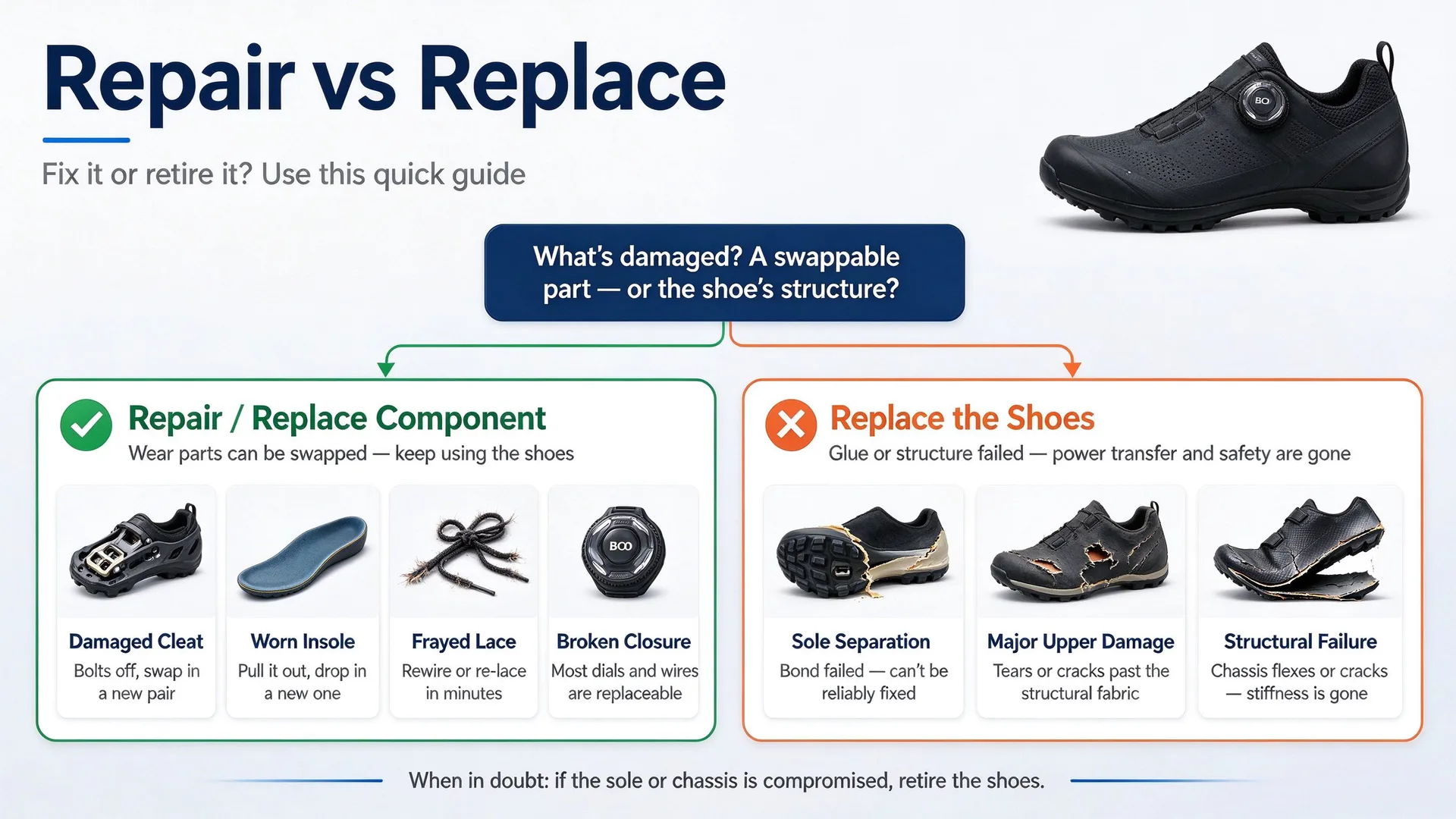
Can Cycling Shoes Be Repaired Instead of Replaced?
Sometimes, yes.
The key is identifying what has failed.
Potentially Replaceable Components
Depending on the shoe design, you may be able to replace:
- Cleats
- Insoles
- Some closure components
- Laces
- Straps
- Certain hardware
Problems That May Require New Shoes
Replacement is more appropriate when there is major:
- Sole separation
- Structural upper damage
- Heel structure failure
- Extensive internal deterioration
- Outsole failure
- Loss of overall support
This distinction can save money because not every worn component requires a completely new pair.
Shimano also notes that some MTB shoe components can be serviced or replaced, while structural damage may mean that the shoe itself should be replaced.
Does Walking in Cycling Shoes Make Them Wear Out Faster?
It can.
The amount of additional wear depends heavily on the shoe design and how much walking you do.
Road racing shoes are generally designed around pedaling performance rather than extensive walking.
MTB and gravel shoes may have tread patterns and outsole constructions designed to provide more practical off-bike traction.
If you regularly walk long distances in a road-oriented cycling shoe, you may accelerate wear around the outsole and cleat area.
For riders who frequently combine cycling with walking, choosing a shoe designed for that use is usually more appropriate than expecting a pure road racing shoe to behave like an everyday walking shoe.
How to Make Cycling Shoes Last Longer
You do not need complicated equipment to extend the useful life of cycling shoes.
Follow these basic habits.
1. Clean Dirt Soon After Riding
Mud and grime are easier to remove before they become embedded.
2. Dry Shoes Completely
Moisture is one of the biggest enemies of long-term footwear condition.
3. Do Not Use Excessive Heat
Natural air drying is generally safer than high-temperature drying.
4. Avoid Unnecessary Walking
Especially with shoes designed primarily for road riding.
5. Check the Cleat Area
Loose or worn cleat hardware can affect the shoe-pedal connection.
6. Inspect the Closure System
Make sure the dial, strap or lace system still holds securely.
7. Store Shoes in a Dry, Ventilated Place
Avoid leaving wet shoes inside a closed cycling bag.
8. Do Not Ignore Small Structural Problems
A small problem can become a larger one if the shoe continues to be exposed to repeated stress.
Cycling Shoe Care Checklist
Use this simple checklist before deciding whether you need a new pair.
| Area | What to Check | Action |
|---|---|---|
| Upper | Tears, severe abrasion | Repair or replace |
| Outsole | Heavy wear, missing tread | Replace if performance is affected |
| Sole connection | Separation | Replace |
| Closure | Dial, strap or lace damage | Repair if possible |
| Heel | Excessive movement | Inspect / replace |
| Interior | Severe lining wear | Replace insole or shoe |
| Cleat area | Damage or excessive wear | Inspect components |
| Odor | Persistent smell after cleaning | Inspect interior condition |
| Overall fit | Loss of support | Consider replacement |
Cycling Shoe Lifespan: Don’t Use Age Alone
A common mistake is to ask:
“How many years should cycling shoes last?”
Age can be useful, but it should not be the only factor.
Consider two cyclists.
Rider A
- Rides twice per month
- Mostly dry road conditions
- Rarely walks
- Cleans shoes regularly
- Stores shoes in a dry location
Rider B
- Rides several times per week
- Frequently rides in mud
- Walks in MTB shoes
- Rides in wet conditions
- Leaves shoes damp in a cycling bag
Even if both pairs of shoes are the same age, their actual condition may be very different.
This is why condition-based replacement is more useful than an arbitrary replacement date.
How Cycling Shoe Construction Affects Durability
Cycling shoe durability starts long before the first ride.
For manufacturers, durability can be influenced by:
- Upper material
- Material thickness
- Reinforcement zones
- Stitching
- Bonding
- Outsole material
- Sole construction
- Heel structure
- Closure attachment
- Internal lining
- Overall shoe construction
For example, an MTB shoe may require more reinforcement around the toe and heel than an indoor cycling shoe.
A road racing shoe may prioritize low weight and a close-fitting upper.
This means durability is not simply a property of one material.
It is a result of the complete shoe construction.
For more information about different upper materials, see our guide:
[Cycling Shoe Materials Guide: Microfiber, Mesh, TPU & More]
How Manufacturers Test Cycling Shoe Durability
For cycling shoe brands, durability should ideally be considered during product development rather than after mass production.
[From Concept to Production: How Custom Cycling Shoes Are Developed by OEM Manufacturers]
A manufacturer may evaluate areas such as:
Upper Abrasion
Can the upper withstand repeated friction?
Closure Attachment
Can the dial, strap or other closure remain securely attached?
Sole Bonding
Does the connection between the upper, midsole and outsole remain stable?
Heel Structure
Does the heel retain its intended support after repeated use?
Outsole Wear
How does the sole respond to repeated contact with pedals and walking surfaces?
Material Fatigue
Does repeated bending or movement cause premature deterioration?
For an OEM project, these considerations should be discussed together with the target application and expected use conditions.
When Should You Replace Road Cycling Shoes?
Consider replacement when you notice:
- Significant sole damage
- Cleat-area damage
- Major upper tears
- Closure failure
- Loss of heel support
- Severe internal wear
- Significant change in fit
- Reduced overall stability
Minor scratches or cosmetic discoloration alone usually do not mean that a road cycling shoe needs to be replaced.
When Should You Replace MTB Cycling Shoes?
MTB shoes generally deserve particularly careful inspection because they may experience:
- Mud
- Rocks
- Water
- Walking
- Trail impacts
- Abrasion
Pay special attention to:
Outsole tread + toe protection + heel structure + closure + sole connection
If several of these areas are significantly worn at the same time, replacing the shoes may make more sense than continuing to repair individual components.
When Should You Replace Indoor Cycling Shoes?
Indoor cycling shoes may experience less environmental damage, but high-frequency training can still create substantial wear.
Check:
- Upper
- Closure
- Heel
- Footbed
- Interior lining
- Cleat area
Because indoor cycling often produces significant sweat, drying and ventilation are particularly important parts of indoor cycling shoe care.
For more information about indoor cycling footwear, see:
[Best Indoor Cycling Shoes for Spin Classes: Complete Buying Guide]
Frequently Asked Questions
How long do cycling shoes last?
There is no universal lifespan for cycling shoes. Their usable life depends on riding frequency, environment, construction, materials, walking, cleaning and storage. Replace them when wear begins to affect fit, support, stability or performance.
How do I know if my cycling shoes are worn out?
Look for sole separation, heavily worn tread, damaged closures, major upper tears, excessive heel movement, worn internal materials and a noticeable loss of support.
Should I replace cycling shoes if they are scratched?
Not necessarily. Cosmetic scratches are usually different from structural damage. If the shoe remains secure, supportive and functional, surface scratches alone are not normally a reason for replacement.
Can cycling shoes be repaired?
Some components may be repairable or replaceable, including cleats, insoles, laces, straps and certain closure components. Major structural damage may require replacing the entire shoe.
Can I wash cycling shoes in a washing machine?
Hand cleaning is generally the safer method because cycling shoes contain multiple materials, bonded components and structural parts.
Can cycling shoes go in a dryer?
Avoid high heat. Air drying in a well-ventilated area is generally safer for cycling footwear.
How can I make cycling shoes last longer?
Clean them regularly, remove mud promptly, dry them completely, avoid unnecessary walking, inspect the closure and sole, and store them in a dry ventilated location.
Do MTB cycling shoes wear out faster than road cycling shoes?
Not necessarily, but MTB shoes can experience more varied physical stress from mud, rocks, walking and trail impacts. Their wear pattern can therefore be different from road cycling shoes.
Is there a mileage limit for cycling shoes?
There is no universal mileage limit. Riding conditions, construction, walking, cleaning and frequency of use can affect wear much more than mileage alone.
Final Thoughts
How long do cycling shoes last?
The best answer is: until they can no longer provide the support, fit, stability and performance you need.
Instead of replacing cycling shoes simply because they have reached a certain age, inspect the areas that matter:
Upper → Sole → Closure → Heel → Interior → Cleat Area → Overall Fit
Regular cleaning and proper drying can help maintain your shoes, while early inspection can help identify problems before they become serious.
For cyclists, this means better equipment management and potentially lower long-term costs.
For cycling shoe brands, the same principle applies during product development: durability should be designed into the shoe from the beginning through material selection, reinforcement, construction and quality control.
If you are developing a cycling shoe brand or looking for a manufacturer for OEM, ODM or private label cycling shoes, our team can help evaluate the appropriate upper materials, outsole construction, closure system and production requirements for your target market.
Contact us with your cycling shoe concept, reference sample, CAD/PDF design or product requirements to discuss your project.
[Cycling Shoes Manufacturer in China: Complete Guide to Finding the Right OEM Supplier]