
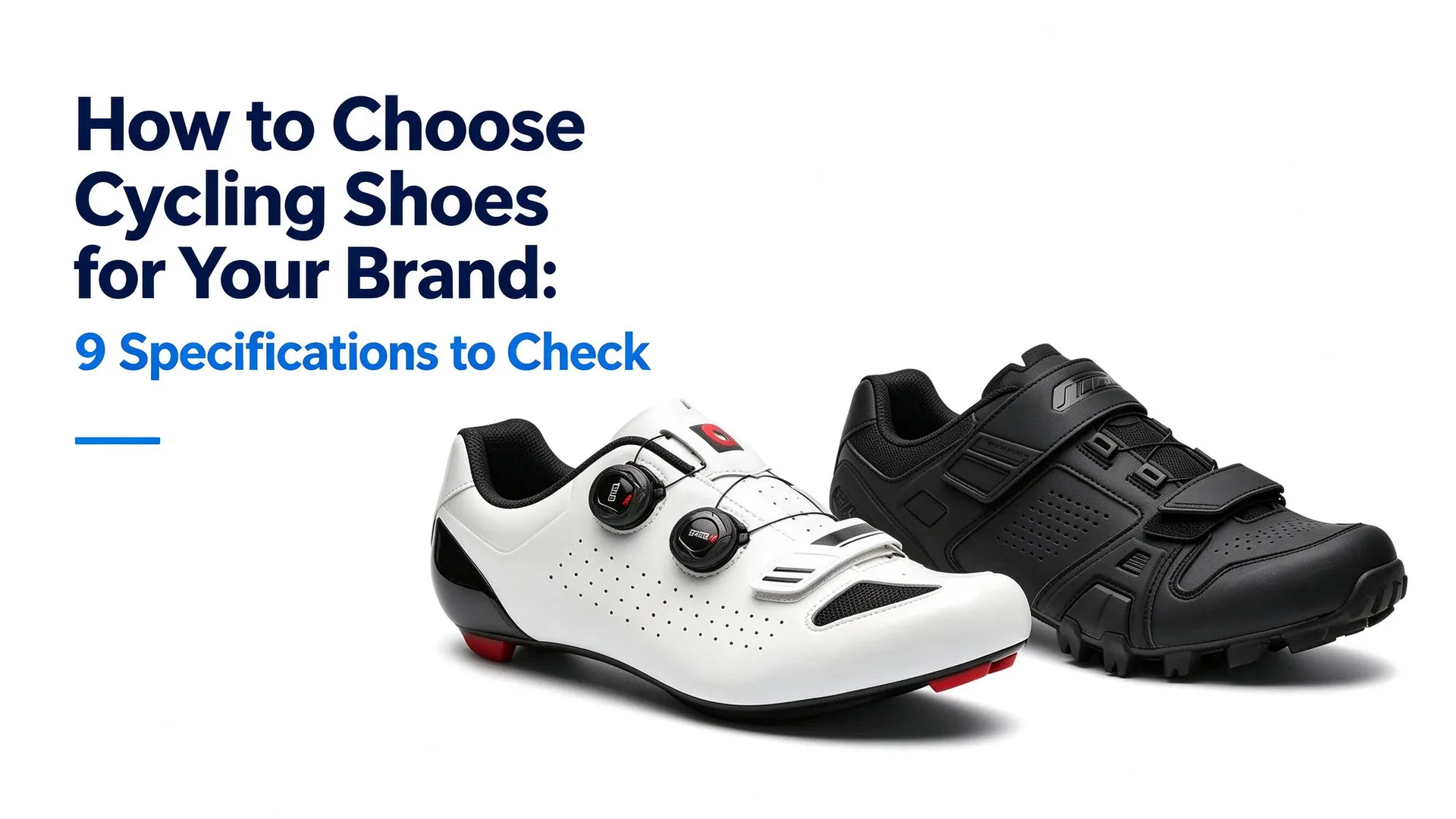
Choosing cycling shoes for a bicycle brand, retail business, or distribution company involves more than comparing prices and product photos. The right product must match your target riders, pedal systems, expected performance, size range, and quality requirements.
Before placing an order with a cycling shoe supplier, buyers should review the product specifications, confirm the exact shoe configuration, evaluate samples, and agree on measurable quality requirements.
The short answer: Start with your target market and riding category, then verify cleat compatibility, sole stiffness, fit, materials, closure system, weight, sizing, durability requirements, and customization options. Finally, confirm that the approved sample and bulk-production specifications match.
This guide explains the nine most important cycling shoe specifications to check before sourcing products for your brand, with a practical checklist you can use when contacting an OEM or private label cycling shoe manufacturer.
What Are Cycling Shoe Specifications?
Cycling shoe specifications are the technical and commercial details that define a shoe’s construction, intended use, compatibility, sizing, performance characteristics, and available customization options.
For a brand or retailer, these specifications help answer three important questions:
- Is the shoe suitable for the target customer?
- Does the product meet the brand’s performance, quality, and price requirements?
- Can the supplier manufacture the agreed product consistently?
A product specification sheet should provide enough information for a buyer to compare models, request samples, evaluate suitability, and prepare an informed purchase decision.
1. Define the Target Market and Riding Category
Before comparing individual shoe features, decide which type of rider you want to serve.
Different cycling disciplines require different combinations of sole stiffness, traction, walkability, protection, ventilation, and cleat compatibility.
| Product category | Key specifications to consider | Typical target customer |
|---|---|---|
| Road cycling shoes | Road cleat mounting, sole stiffness, secure fit, low weight | Road cyclists, racers, performance-focused riders |
| MTB cycling shoes | SPD compatibility or flat-pedal construction, outsole grip, durability | Mountain bikers and off-road riders |
| Gravel cycling shoes | Off-road cleat compatibility, traction, pedaling support, walkability | Gravel and mixed-terrain cyclists |
| Indoor cycling shoes | Studio pedal compatibility, ventilation, convenient adjustment | Spin studios and indoor cycling customers |
| Casual cycling shoes | Walking comfort, everyday appearance, suitable outsole | Commuters and recreational cyclists |
These are general product-planning guidelines, not universal rules. The ideal configuration depends on the intended customer and the specific shoe design.
Buyer tip: Avoid trying to make one model satisfy every riding category. A clear product positioning strategy makes it easier to select appropriate specifications, price the product, and explain its benefits to customers.
2. Confirm Cleat Compatibility Before Ordering
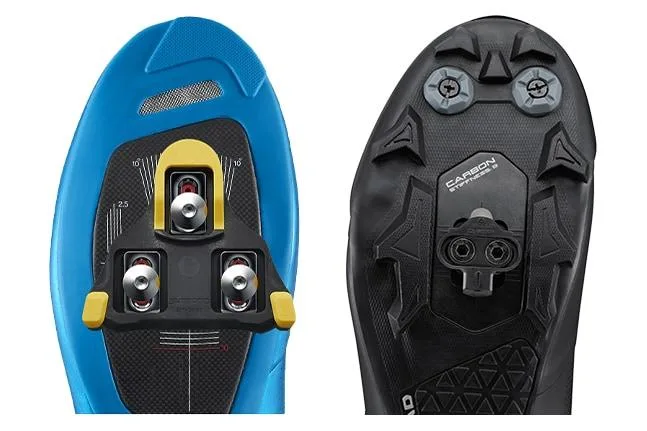
Cleat compatibility is one of the most important cycling shoe specifications because it determines whether the shoe can be used with the customer’s intended pedal system.
Common configurations include:
- 3-bolt road mounting: Commonly associated with SPD-SL road pedal systems.
- 2-bolt mounting: Commonly associated with SPD pedal systems used in MTB, gravel, touring, and other cycling applications.
- Flat-pedal construction: Designed for platform pedals and generally does not require a cleat mounting interface.
These systems are not interchangeable simply because they are used for cycling.
Before requesting a quotation, ask the supplier to confirm the mounting pattern and exact sole configuration. If a shoe is available in both road and MTB versions, confirm whether these are separate outsole options or one design with multiple mounting positions.
Do not rely only on the product category name or an upper design that looks similar across models.
For more information, read our guide to SPD vs. SPD-SL: What’s the Difference and Which Should You Choose?
3. Evaluate Sole Material and Stiffness
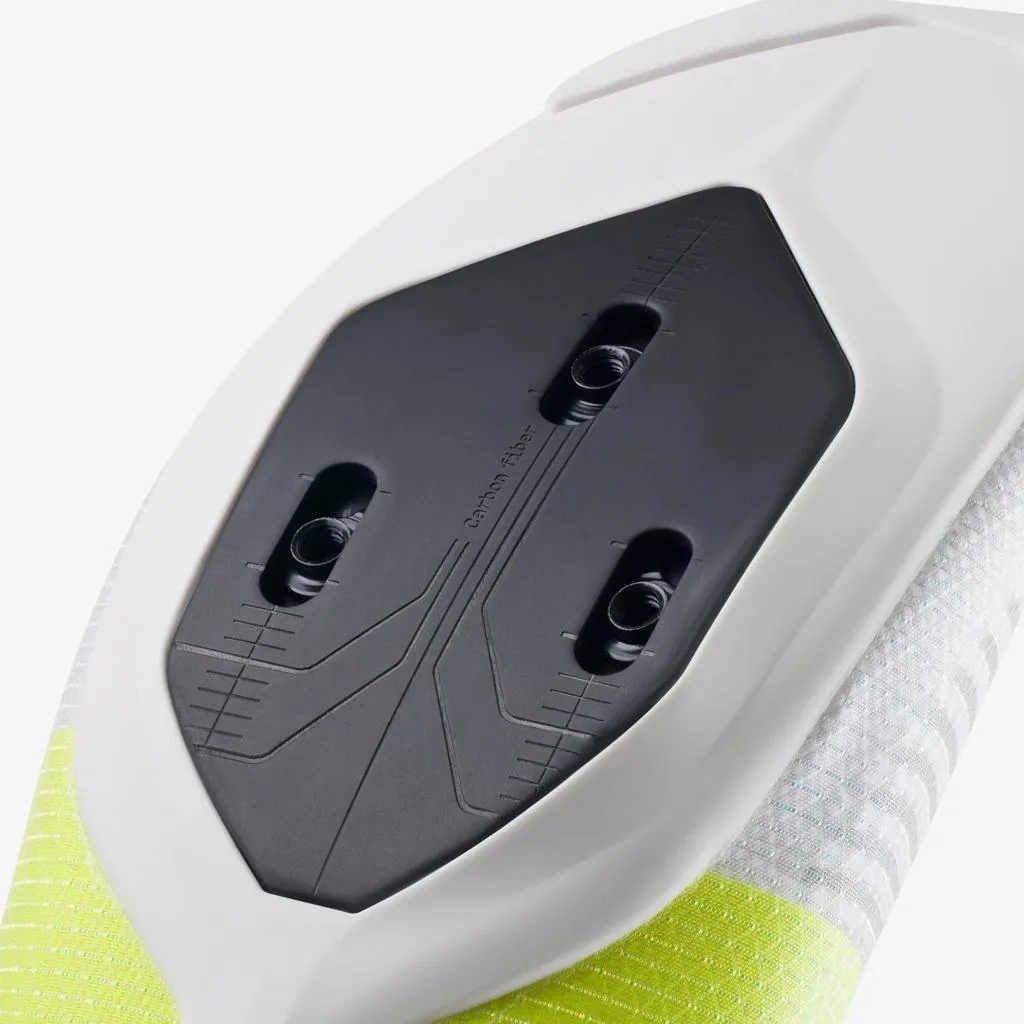
The sole influences how the shoe supports the foot during pedaling. Buyers should consider both the sole material and the intended stiffness rather than choosing a product solely because it is described as a performance shoe.
Common construction options include:
- Nylon soles: Often used in versatile cycling footwear, with characteristics depending on the formulation and construction.
- Glass fiber reinforced nylon: Combines a nylon base material with glass fiber reinforcement to increase structural rigidity.
- Carbon fiber composite soles: Commonly used in performance-focused models where low weight and high stiffness are priorities.
- Rubber outsoles: Used in flat-pedal and selected walkable cycling shoes where grip and off-bike usability matter.
The material name alone does not establish the performance of a finished sole. Construction, thickness, reinforcement, shape, and manufacturing quality also matter.
Cycling shoe sole stiffness index guide
How Should Buyers Compare Sole Stiffness?
Ask the supplier for the manufacturer’s stated stiffness index or other documented rating, if available. Then confirm how that rating is defined.
Important: Stiffness scales are not necessarily standardized across different manufacturers. A rating of 8 from one supplier should not automatically be treated as equivalent to a rating of 8 from another.
For a more detailed explanation, read our Cycling Shoe Sole Guide: Carbon Fiber vs. Nylon, Stiffness, Weight & Power Transfer.
4. Check Upper Materials and Construction
The upper affects how the shoe wraps around the foot, how it feels during use, and how it looks on the shelf.
Common materials and constructions include:
- Microfiber: Frequently used in structured synthetic uppers.
- Mesh: Used in areas where airflow is a priority.
- Flyknit or other knitted fabrics: Offer a textile-based construction with potential flexibility and ventilation benefits.
- TPU components: Used in selected designs for reinforcement, support, or other functional purposes.
The best choice depends on the intended riding category, target price, visual design, and performance requirements.
When evaluating a supplier’s material claims, ask which materials are used in the main upper, reinforcement zones, lining, and other key areas. A broad description such as “breathable upper” is less useful than a clear material specification supported by a physical sample.
Also check whether the material appearance, color, texture, and construction remain consistent with your brand requirements.
5. Compare Closure Systems and Fit Adjustment
The closure system helps secure the foot and allows riders to adjust tension.
Common options include:
| Closure system | Potential advantages | Buyer considerations |
|---|---|---|
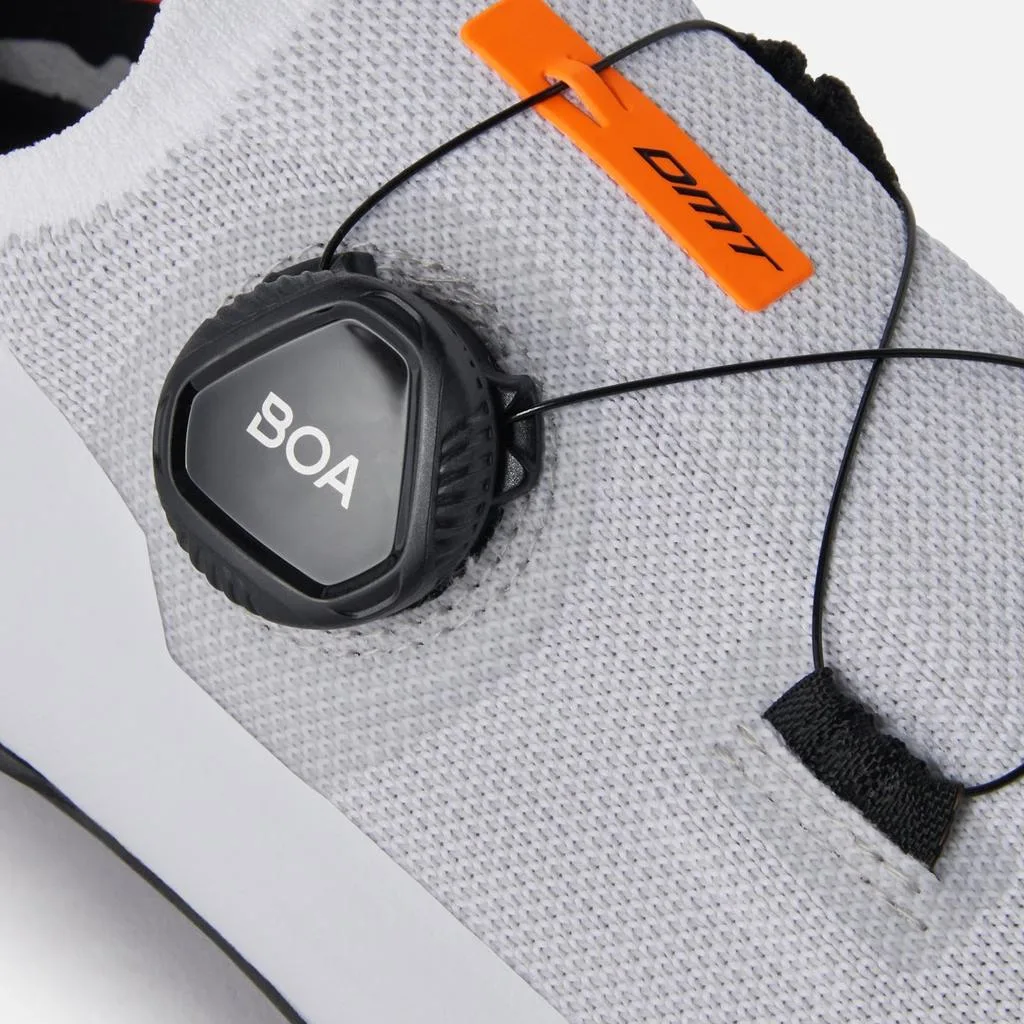
| Rotary dial closure | Convenient, fine tension adjustment | Confirm dial, cable, and replacement-part arrangements |
| Hook-and-loop straps | Simple operation and straightforward construction | Check strap adhesion, adjustment range, and wear |
| Laces | Flexible tension distribution and a traditional appearance | Consider adjustment convenience and lace management |
| Combined systems | Multiple adjustment points | Evaluate complexity, cost, and user preference |
No closure system is automatically the best for every customer.
When evaluating a sample, check whether the shoe can be secured without excessive pressure. The closure should help achieve a suitable fit, not compensate for an incorrect size or shoe shape.
For a more detailed comparison, read our article BOA vs. Velcro vs. Laces: Which Cycling Shoe Closure System Is Best?
When sourcing rotary dial systems, also confirm whether the components are branded or unbranded. Do not describe a generic rotary closure as a BOA system unless the actual components are genuine BOA products.
cycling shoe fit and cleat compatibility
6. Verify Fit, Last Shape, and Size Range
Size availability is important, but a broad size range does not guarantee that the shoe will fit every customer.
Buyers should review:
- Available sizes and the sizing standard used.
- The manufacturer’s size chart and foot-length recommendations.
- Forefoot width and overall internal volume.
- Heel hold and instep shape.
- Differences between standard and wide-fit options, if available.
- Whether the sample feels secure without painful pressure.
A key purchasing principle: Shoe length and shoe width are different fit characteristics. Increasing the size may not solve a shoe that is too narrow.
If your customers frequently request wider shoes, confirm the actual last shape and available outsole configurations. A wide upper does not necessarily mean the sole platform has also been redesigned for a wider foot.
Before approving a model, evaluate samples in representative sizes rather than assuming that one size will predict the fit of the entire range.
See our Cycling Shoe Size Guide: How Should Cycling Shoes Fit? and Wide Cycling Shoes for Wide Feet: How to Choose the Right Fit, Toe Box & Last for more detailed guidance.
7. Confirm Weight and Other Measurable Specifications
Weight can influence product positioning, especially for performance-oriented cycling shoes. However, a weight claim is only useful when the measurement conditions are clear.
When comparing products, ask the supplier to specify:
- Whether the weight is for one shoe or a pair.
- Which size was measured.
- Whether the stated weight includes insoles, cleats, or other accessories.
- Whether road and MTB versions have different weights.
- Whether the figure is an approximate specification or a measured sample result.
Other measurable details may include sole thickness, available size range, closure components, and the number of available color options.
Do not compare weight figures from different suppliers without checking the measurement basis. A pair measured in one size is not directly comparable with a single shoe measured in another size.
For your product database, record the measurement method alongside the value so that product pages and quotations remain consistent.
8. Establish Quality Control and Durability Requirements
A professional product specification should explain how quality will be assessed, not just how the shoe is marketed.
Before bulk production, buyers and suppliers should agree on the most important inspection points for the particular model.
A practical quality checklist may include:
- Upper material, color, and workmanship.
- Sole attachment and visible bonding defects.
- Cleat mounting positions and relevant hardware.
- Closure operation and adjustment.
- Stitching, seams, lining, and finishing.
- Size labeling and packaging.
- Appearance consistency against the approved sample.
For products with specific durability requirements, discuss appropriate tests with the supplier. These may include repeated closure operation, sole-bonding assessments, material abrasion checks, or other tests relevant to the intended use.
The actual test method, acceptance criteria, sample size, and results should be agreed upon in advance.
Do not rely on phrases such as “premium quality” or “long service life” as substitutes for documented acceptance criteria. Similarly, do not assume that a supplier’s product has a certification or has passed a test unless supporting documentation is available and applicable to that product.
For an OEM project, keep a reference sample and written specification record so that the approved design can be compared with bulk production.
9. Review OEM, Private Label, and Customization Options
If you are developing your own cycling footwear brand, confirm which product features can be customized before finalizing your business plan.
Potential options, depending on the supplier and model, may include:
- Logo placement and branding method.
- Upper colors and selected material options.
- Closure-system configuration.
- Road or MTB sole selection.
- Packaging and labeling.
- Size range and product assortment.
- Custom design and development requirements.
Not every option is available on every existing model. Some changes may require new components, tooling, additional development time, or minimum order quantities.
Ask the supplier to distinguish between three levels of customization:
Existing model with branding: An existing product with a logo or other agreed branding applied.
Modified existing model: An existing design with approved changes to selected materials, colors, or components.
New product development: A new design or substantial redesign that may require technical drawings, samples, revisions, and development fees.
This distinction helps buyers understand the likely cost, schedule, and complexity before committing to a project.
For a step-by-step overview, read our guide From Concept to Production: How Custom Cycling Shoes Are Developed by OEM Manufacturers.
Cycling Shoe Specification Checklist for Buyers
Use the following checklist before requesting a quotation or approving a sample.
| Item | What to confirm |
|---|---|
| Product category | Road, MTB, gravel, indoor, or casual |
| Cleat compatibility | Exact mounting pattern and sole version |
| Sole construction | Material, design, and stated stiffness rating |
| Upper | Material composition and construction |
| Closure | System type and available adjustment |
| Fit | Last shape, width, volume, and size chart |
| Weight | Per shoe or pair, measurement size, and included components |
| Quality requirements | Inspection points and applicable test criteria |
| Customization | Logo, color, materials, packaging, and development scope |
| Commercial terms | MOQ, sample cost, unit price, lead time, and payment terms |
The more clearly these requirements are defined, the easier it is to compare quotations from different suppliers on a like-for-like basis.
What Should You Ask a Cycling Shoe Manufacturer Before Ordering?
When contacting a supplier, start with the information needed to evaluate product suitability and commercial feasibility.
Useful questions include:
- Which sole and cleat configurations are available for this model?
- What upper and outsole materials are used?
- What is the available size range, and can you provide a size chart?
- What is the measured weight and measurement size?
- Can we review a sample before bulk production?
- What are the MOQ, sample cost, production lead time, and unit price?
- Which branding and customization options are available?
- What quality checks are performed before shipment?
- How are approved specifications and sample changes documented?
For a more comprehensive supplier-selection process, see our guide to How to Choose a Reliable Cycling Shoes Manufacturer for Your Brand.
Frequently Asked Questions
What are the most important cycling shoe specifications?
Start with riding category, cleat compatibility, fit, sole construction, upper materials, closure system, and size range. For commercial sourcing, also confirm weight, quality requirements, customization options, MOQ, and lead time.
What should I check before buying cycling shoes wholesale?
Confirm the intended customer, exact product configuration, size assortment, sample quality, unit pricing, MOQ, production schedule, and inspection requirements. Compare suppliers using the same specification checklist rather than price alone.
Are carbon fiber cycling shoes always better than nylon cycling shoes?
Not necessarily. Carbon fiber composite soles are commonly used for performance-focused footwear, while nylon-based soles can provide a different balance of stiffness, cost, and versatility. The best option depends on the intended rider and product positioning.
Does a higher cycling shoe stiffness rating always mean better performance?
No. Stiffness ratings may use different scales across manufacturers, and a higher number is not automatically better for every riding category. Confirm how the rating is defined and choose a sole appropriate for the intended use.
Can I customize cycling shoes with my own brand logo?
Many OEM suppliers offer branding options, but the available methods, MOQ, costs, and lead times depend on the model and customization scope. Confirm the details before approving a sample or placing a bulk order.
How can I reduce quality problems in an OEM cycling shoe order?
Provide a clear specification sheet, evaluate a sample, document the approved configuration, agree on inspection criteria, and confirm that the bulk order will follow the approved specifications. Any changes should be reviewed and approved before production continues.
What information should I include when requesting a cycling shoe quotation?
Include the intended riding category, preferred sole and cleat system, size range, estimated quantity, branding requirements, target market, and sample requirements. This allows the supplier to provide a more relevant quotation and identify any technical questions early.
Looking for an OEM or Private Label Cycling Shoe Supplier?
Choosing the right cycling shoe is only the first step. A successful product launch also depends on clear specifications, sample approval, consistent production, and communication between your brand and manufacturing partner.
We support cycling shoe OEM and private label inquiries for businesses developing their own footwear collections. Depending on the model and project requirements, buyers can discuss existing shoe styles, branding options, selected material or color changes, and custom development possibilities.
To help us evaluate your project, please share:
- Your brand or business profile and target market.
- The road, MTB, indoor, or other cycling shoe category you need.
- Your preferred sole, cleat system, and upper materials.
- Your target sizes and estimated order quantity.
- Your branding or customization requirements.
- Your target price range and expected launch schedule.
Contact our team to discuss your cycling shoe requirements, request product information, and explore available sample and OEM options.
A clear brief helps us understand your project and identify the most suitable next steps.